Local Leaders Urged to Drive Source-Based Waste Sorting Movement
Reported by Aldi Geri Lumban Tobing | Translated by Nugroho Adibrata
Jakarta Environmental Agency is engaging local leaders to drive the 'Source-Based Waste Reduction and Sorting' movement. Backed by Governor Pramono, this approach is viewed as a vital key to long-term waste management in the capital.
Waste separation at the source needs to be done consistently and widely
Jakarta Environmental Agency Head, Asep Kuswanto remarked that handling waste should not just be about hauling it away to landfills. Instead, more basic efforts need to start at home, where most waste originates.
"Waste separation at the source needs to be done consistently and widely to significantly cut down the amount of trash being sent to the Bantargebang landfill," he expressed, Monday (4/6).
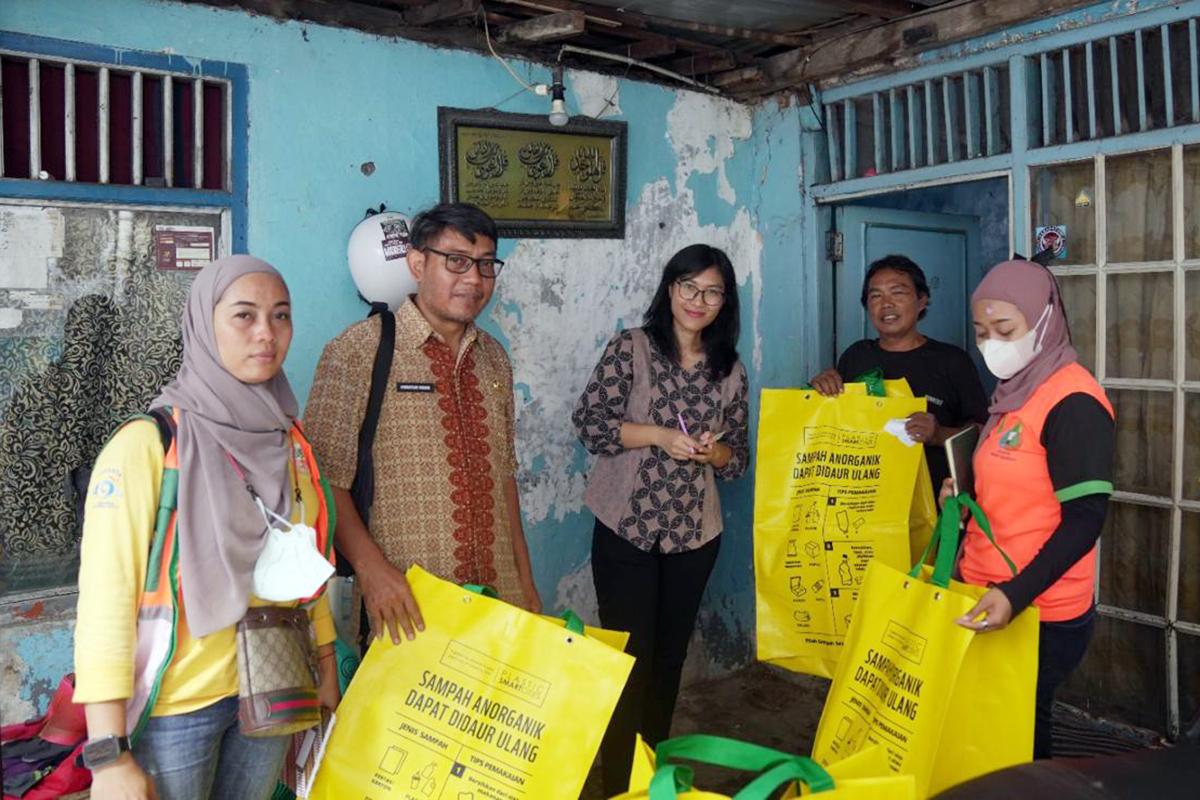
West Jakarta LH Promotes Waste Sorting at Pesakih Public HousingHe pointed out that strong coordination across all administrative levels—cities, sub-districts, and villages—is key to the movement's success. Local authorities play a vital role in educating the public and making sure that sorting waste becomes a daily habit.
Further, he urged local officials to revitalize existing community-based waste management systems to bolster these efforts.
"We hope to see the Waste Management Units (BPS) at the neighborhood level return to being the center of local waste management initiatives," he added.
According to him, organic waste treatment using Black Soldier Fly bioconversion should be brought back to life. This method is highly effective at tackling food scraps, the primary component of household trash. Meanwhile, he is also pushing for the reinforcement of 'waste banks' to handle recyclables.
"Beyond just cutting down on waste, these waste banks offer economic benefits to the residents," he added.
Asep reminded that the waste issue is a shared responsibility requiring cross-sector collaboration between the government, communities, and residents. He added, waste management efforts would be more effective and sustainable through collective action.
"When sorting waste becomes a household habit—such as separating food scraps from plastics and not mixing them in a single bin—we are building a new culture. The impact will be profound, not only for environmental cleanliness but also for public health and the quality of life," he concluded.